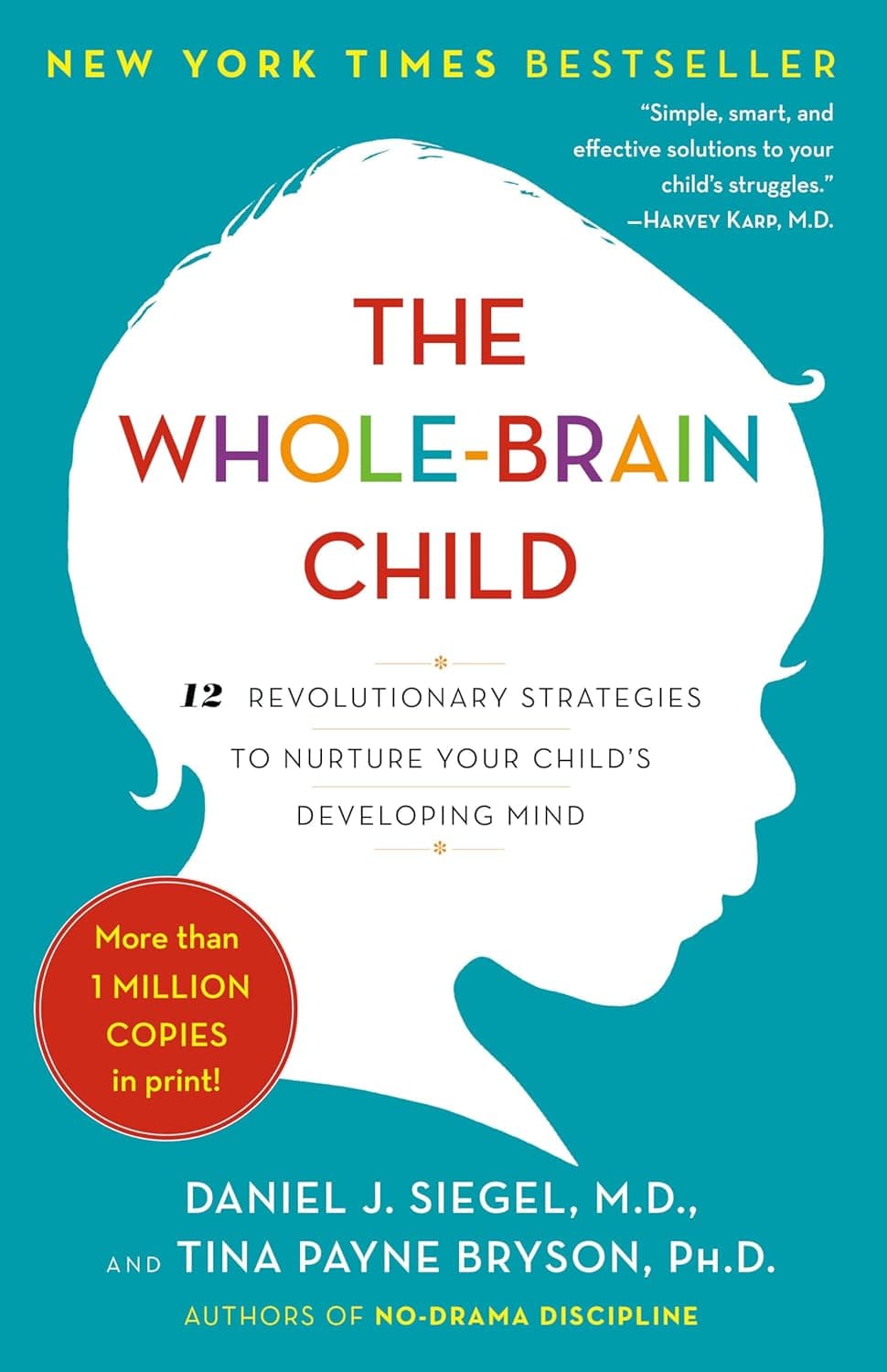
The Whole Brain Child
by Daniel J Siegel & Tina Payne Bryson
Mezy Fadhila
23 Juni 2026
Non-Fiction
The whole-brain child is a book that shows us the scientific aspects of the brain our children are dealing with. Important to know the context and to identify what we want to improve.
Left and right for clarity and understanding. Logical and emotional.
Upstairs brain and downstairs brain: the planning and thinking vs the primitive and defensive part of the brain.
Memory: the implicit and explicit memory. Using the remote to walk down memory lane can help children define things accurately based on their memories. Like ours, their memories are sometimes not always like what they were, not to mention serving the children well. We need to train our thoughts and memories so we can survive and thrive.
Integrating many parts of yourself. That you put your attention to. The rim of the brain, the awareness state of mind.
Integrating self and others. We can teach the children that if there is "me," there is also "we". The social part of our self.
What I Loved
I love the way this book opens up all the brain sides of a human, left and right, upstairs and downstairs, implicit and explicit, many parts of themselves, and integrating yourself and others.
Not only does it help us develop strategies to deal with tantrums, difficult situations, trauma, shyness, and nervousness in our children, but it also helps us know which part of the brain we are dealing with and need to address instead. It is very practical, with the case studies that help us, as parents, imagine the real situations that might come our way. Like on how to deal with children who were traumatized by the car crash, but they were only 2 years old, they cannot express their feelings, not to mention dealing with it.
Or the time when a kid is very self-centered, rather than thinking about siblings or others around them. We can help them to think of others in the mindsight: insight+emphaty.
Or the time when we deal with children who are very nervous about the music recital, or do not want to continue the swimming lesson because there is a butterfly in their stomach.
The book also provided us with a "refrigerator sheet" to remind us, at every age, of our children right now and of strategies that might help you and your children become better people. Both of you.
I love this book so much that I even bought it instead of borrowing it from the city library because I know I will read it again sometime in the future.
Comments
Loading comments...