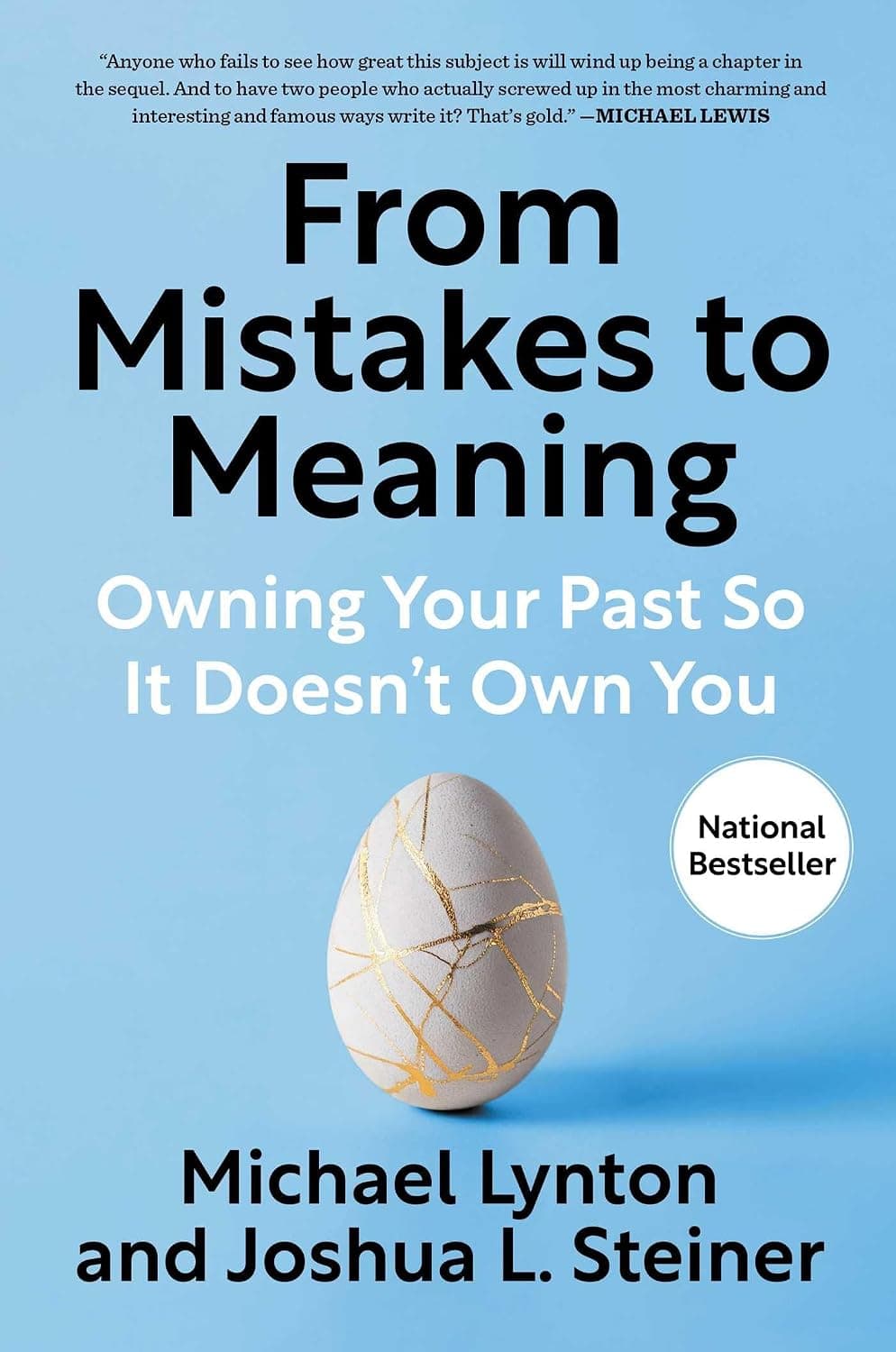
From Mistakes to Meaning: Owning Your Past So It Doesn't Own You
by Michael Lynton and Joshua L. Steiner
Mezy Fadhila
February 24, 2026
Non-FictionSelf-Help
So the book is written by Michael and Joshua, and Alison Papadakis, Director of Clinical Psychological Studies at Johns Hopkins, they ground their observations in relevant research and unpack the difference between failures and mistakes, the stages of mistakes, and how it's possible to break the patterns that lead to misunderstandings and shame.
They rooted their story on the authors own critical mistakes in life, and several well known and big personalities. To make their points.
The book made a good point when it said: there are many books that focus on failure, rather than mistake. Mistakes are seen as shame, when it shouldn't be. Same as failures, mistakes can make people a better one.
They frame all the mistakes look like. The impacts that happen, the consequence of that mistakes. And the big negative feelings people have around mistakes.
And they stretch readers' sense of Schema. Schema is the deeper, underlying pattern or mental template—often formed early in childhood—that drives our perceptions, behaviors, and choices, frequently leading to recurring mistakes. It is tool to analyse why mistakes happen, and it can be different amongst people.
They also then introduce DUET, on how we should response to mistakes:
- Disclose: Share your mistakes honestly instead of hiding them out of shame. Admitting what happened breaks the secret power the past holds over you.
- Unpack: Examine the mistake using a three-act structure. Look closely at what happened before, during, and after the event to understand the root causes.
- Empathize: Show kindness and understanding toward yourself and the person listening. Empathy removes harsh judgment and creates a safe space for real change.
- Trust: Rely on the close people in your life by sharing your truth with them. Honest conversations deepen your friendships and prove your mistakes do not define your character.
They also helped with the way how to make fewer mistakes when you already know your schema:
1. Take a Deep Breath
- Pause before you act: The authors emphasize that giving yourself a brief moment to breathe disrupts the automatic, emotional responses that often trigger missteps.
2. Balance Instinct and Deliberation
- Slow down your thinking: Shift away from pure impulse. The book advises striking a careful balance between making decisions using your intuition and taking a more calculated, deliberate approach.
Comments
Loading comments...