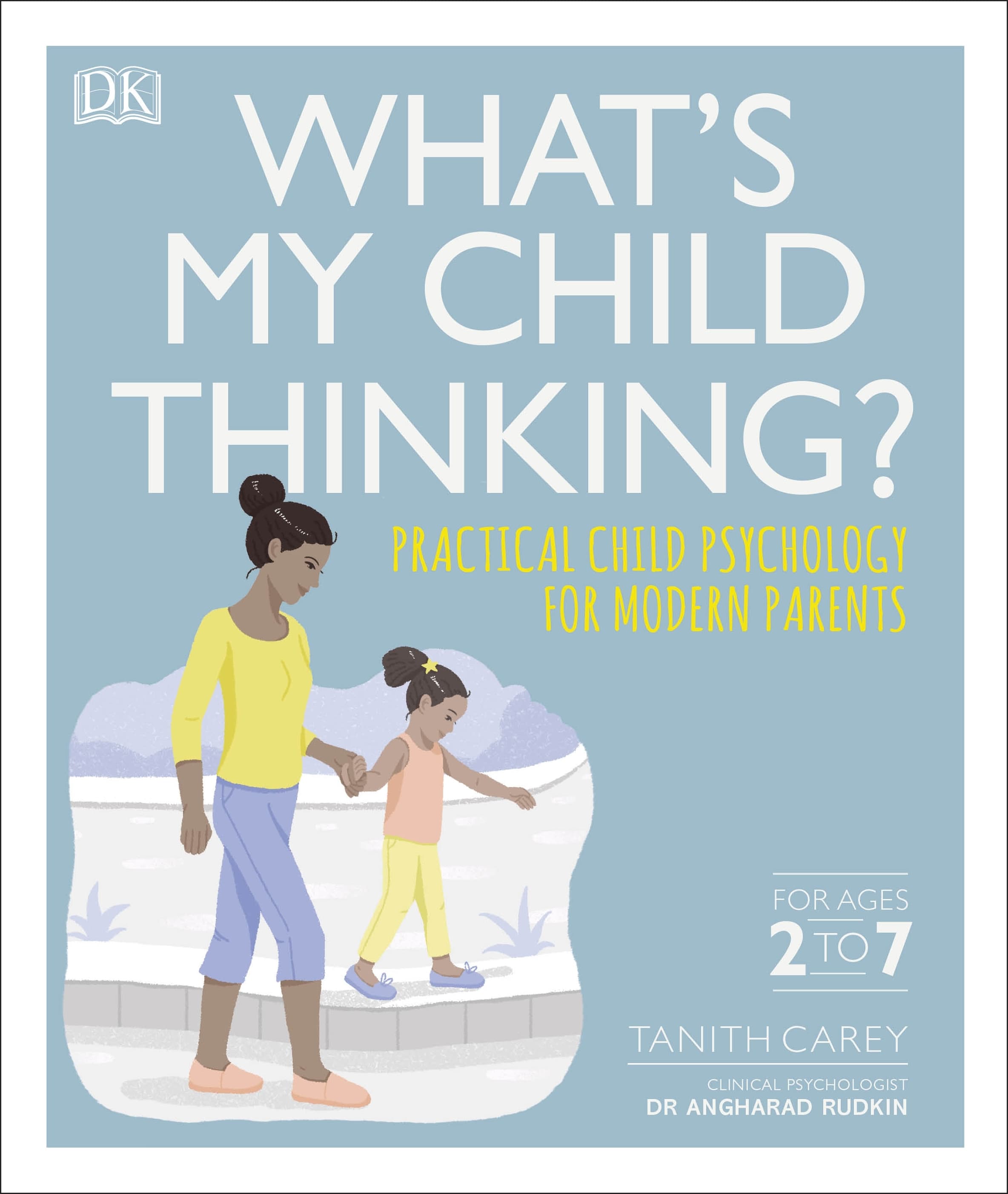
What's My Child Thinking? Practical Child Psychology for Modern Parents
by Tanith Carey, Dr Angharad Rudkin
Mezy Fadhila
February 5, 2019
Non-FictionSelf-Help
It is essentially a book on child development and age-based milestones: ages 2-3, 4-5, 6-7. So it will be around at least my last child is in his/her 8th year. :)
It is definitely my go-to book when faced with a struggle or obstacle in the Abyaz milestone. He might not be able to communicate it yet, so that's why it is a bit confusing sometimes. It is nice to have it around.
What I Loved
I can return to the book whenever I need to check what happened, or what my kid actually thinks or feels in a given situation. For example, I noticed something unusual with Abyaz. When I checked the book, he started behaving a bit bossy at the beginning of the self-agency era.
It included a "Parents' survival guide" for each age group, covering situations where tension, tantrums, or other hardships may arise.
There are scenarios in each group of age, what you might think, what he/she's thinking, and how to wisely response. And often times in my case, what I think and what my son thinks is not even close. So, it helps me to add more perspective to my child's center so I can response better for the sake of his neurons development.
This book will surprise you like it did to me when it has information on 'I got girl/boyfriend', 'money matters', 'do I need to learn music instrument?', after school activities, etc.
It is nice to have Dr. Rudkin as the author as the clinical psychologist to back all the doubts or second guesses that may exist. For us as insecure moms or dads :')
Perfect For
Moms or dads or caregivers/guardians of a first son or daughter, with zero experience and no one close by to ask about the kid's behavioral milestones.
For those who are too embarrassed to ask others or their own parents why their kids are acting weird.
Favorite Quotes
"A "good enough" parent. Many parents feel the pressure to be "perfect". And in a competitive world, it's easier than ever to feel judged and compared. Yet, although it may sound contradictory, one of the best ways to be a good parent is, in fact, to try not to excel. "
Comments
Loading comments...