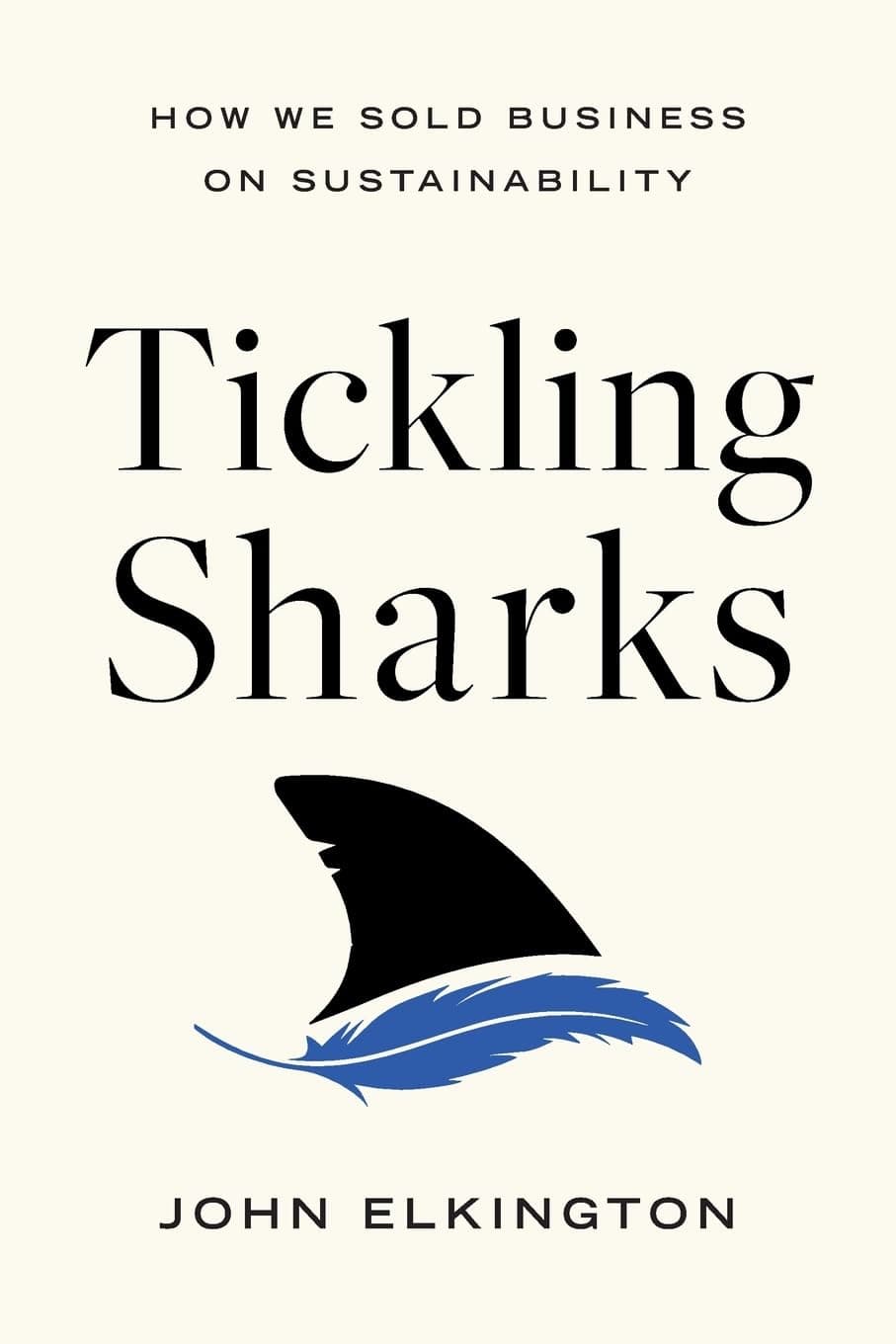
by John Elkington
Sustainability is shifting from a niche concern to a mainstream corporate mandate, but this evolution didn't happen overnight. For decades, the standard capitalist model prioritized relentless growth, a "business-as-usual" approach that was inherently unsustainable.
In this memoir, John Elkington, often called the "Godfather of Sustainability," reflects on fifty years of history to explain how we got here. He explores the following key themes:
Essentially, the text tracks Elkington’s colorful career from youthful inspiration to pioneering the business case for sustainability, offering both a historical witness statement and a manifesto for the future.
Overall, for around 50 years of his career and to the works that he's been doing (he published so many journals and articles, worked with so many big companies, and worked alongside the "sharks"), he has ultimately gained the wisdom on what he is doing. The unusual takeaway is full of wisdom and sharp advice that we can feel as the reader.
John is known as the one who coined the term "Triple Bottom Line"-people, planet, profit.
His educational background:
As I listened to his audiobook, which runs almost 10 hours, I found the most interesting part in the last 2 hours (probably the last 3 chapters), when it finally resonated with my shallow pursuit of sustainability. It aligns closely with the recent intensive summer course I am taking in Climate Change Politics and Policy, where international relations, climate and environmental justice, policy, governance, and the private sector intersect with sustainability agendas.
His background in his parents' work as British nuclear analysts during World Wars I and II had a significant influence on how he views the world. How he discussed his background, his family, the people who influenced his thinking, and the big companies we now know sought his assistance to map and advise on sustainability in their businesses, such as VW, Nestlé, Shell, Exxon, and many others. How the dynamics played an interesting part in the journey and his wisdom. How political influence affected his journey, and how odd it could be. How he emphasizes that we will be asked by future generations about what we have done and what we were thinking to pass this kind of world to them, what successful acts we did, and what did not work. We shall pass on everlasting ideas to the next generations to be remembered. He also highlighted ongoing wars and tensions across countries, particularly over fossil fuels, and noted that AI is not a solution; moreover, we need to domesticate its use to build real-world wisdom. And also to prevent AI's side effects on the environment.
He talked about the sharks, dolphin, and some sea life to make the whole point, and ended up with 10 lessons on how to approach sustainability to "sharks":
1. Speak Truth to Yourself First
Before you "speak truth to power," you must have a clear internal dialogue. Know your own biases, your "breaking point," and your ultimate goal so you aren't swayed by the very systems you aim to change.
2. Meet the Sharks Where They Are
Don't wait for leaders to reach your level of environmental or social awareness. Start the conversation using their language (ROI, risk, resilience) and within their current reality.
3. Resist the Urge to Only Cling to the "Right-Minded"
It is comfortable to stay in "echo chambers" with people who already agree with you. However, real systemic change happens when you step out and engage with those who don't yet share your views.
4. Never Look Like Prey
If you approach a "corporate shark" with a sense of weakness or purely moral pleading, you may be dismissed. Present your case with "hostile intent"—meaning, show that you understand the competitive landscape as well as they do.
5. Avoid the Standard "Elevator Pitch"
Standard pitches are often tuned out. Instead, aim for deeper, more meaningful engagement that disrupts their expectations and forces them to think beyond a 30-second summary.
6. Abandon the "Missionary Position"
Don't preach or lecture. Instead, approach from unexpected angles. Connect on a human level by discussing shared vulnerabilities, their children's future, or the personal legacy they want to leave behind.
7. Don't Assume All Sharks are Evil
Demonizing leaders creates a wall. Many are simply navigating a rigid system. If you assume they have the capacity for good, you are more likely to find the "tickle point" that triggers a shift in their behavior.
8. Avoid "Breathing Your Own Fumes."
It is easy to become addicted to your own ideas or the praise of your peers. Actively seek out "outsider" perspectives—critics, youth activists, or scientists—to stress-test your strategy.
9. Facilitate "Unusual Learning Journeys."
Leaders are often insulated from reality. Encourage them to leave the boardroom and see the "different reality" up close—whether that’s a frontline community, a melting glacier, or a circular-economy startup.
10. Success is Measured by the Progress of Others
Recognize that if you do your job well, other departments (like Finance or Operations) will eventually take "ownership" of your ideas. When sustainability looks like their work rather than your project, you have truly won.
Age-wise (John is 93 years old when he wrote this book) and wisdom-based: none, really.
Sustainability professionals
"His theory of change: Obtain accurate data on key trends; turn it into timely, credible information and useful market intelligence. Over time, we can acquire collective wisdom and determine how to work on the longer term and the rest of our lives. "
"To work on how to tickle the sharks, not only do you need to keep up with your world, but you also need to keep up with their interests. You don't want to only lecture, but to be a great listener to them, too. "
"When you get to live long enough, you kind of get to see that everything you do has come to a full cycle and get back to the point where it started. "
The Learning Guru, Clement Pereira
James Nmeth