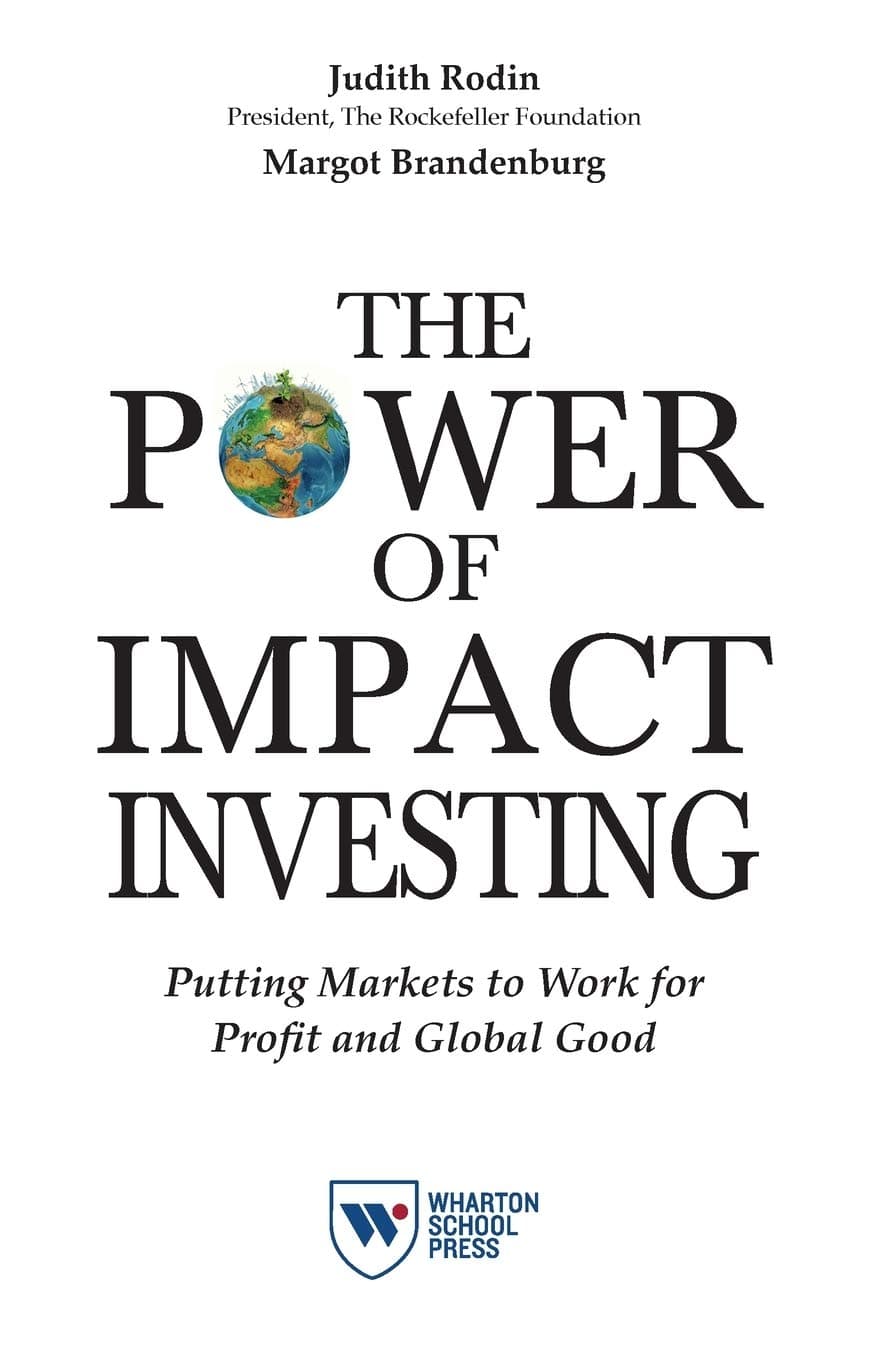
The Power of Impact Investing: Putting Markets to Work for Profit and Global Good
by Judith Rodin and Margot Brandenburg
Mezy Fadhila
6 Mei 2014
Non-Fiction
A new wave of investors is using impact investing to address some of the greatest challenges of our timefrom climate change and water scarcity to lack of access to health care, education, and affordable housingwith the intention of also generating a financial return.
This couldn’t happen at a more critical time. While philanthropy continues to be a transformative force for good, global philanthropic funds, even when combined with the development or aid budgets of many national governments, add up to mere billions of dollars. Meanwhile, the cost of solving the world’s problems runs into the trillions.
In The Power of Impact Investing, Rockefeller Foundation president Judith Rodin and Margot Brandenburg, two of the foremost experts in the field, explain what impact investing is, how it compares to philanthropy and traditional investments, where opportunities are evolving around the world, and how to get started.
By sharing moving stories of impact investors and the exciting social enterprises benefiting from these investments, Rodin and Brandenburg offer a compelling resource for anyone interested in better understanding the power of impact investingincluding retail investors, high-net-worth individuals, and heads of family offices, foundations, banks, and pension fundswhile also offering experienced impact investors an opportunity to deepen their knowledge and benefit from the perspectives of other investors. Source: Amazon Book
Core Structural Overview
- Introduction & The Shift in Global Capital
- The limits of traditional philanthropy and government funding.
- The emergence of impact investing as a mechanism to deploy private capital for social and environmental good.
- Defining Impact Investing
- Core tenets: Intentionality, financial return expectations, asset classes, and impact measurement.
- Comparison with Traditional Value Investing, ESG screening, and Philanthropy.
- The Global Landscape & Ecosystem
- Mapping key market participants: Retail investors, family offices, institutional investors, and foundations.
- Primary investment sectors: Microfinance, clean energy, affordable housing, healthcare, and sustainable agriculture.
Comments
Loading comments...